
Driven by quality and variety, Washington is experiencing growth in aromatic white wines
Written by L.M. Archer
IN A SEA of red wine, the tide for Washington state white wines rises.
Recently, Tenor Wines in Woodinville was awarded a perfect 100 points for its 2022 La Reyna Blanca Vineyard Chardonnay by international wine publication, JebDunnuck.com.
“It was a big high five, a hug, and a significant amount of disbelief,” confesses winemaker Hal Iverson of the achievement. Iverson and fellow winemaker Alex Stewart make the wines for Matthews, Tenor, and Single Barrel brands at Avallé Winemaking Studio in Woodinville, WA.
Global Trend
Ironically, white wines have played an important role in Washington state wine from the beginning.
“White wines were originally a large part of the make-up of Washington grapes, simply because they survived our winters quite well,” says James Mantone of Syncline Wine in the Lyle, Wash. “Over time, we have learned a lot about farming them, and where to farm them, and hence the raw material has gotten better.”
According to a study by the Washington State Wine Commission and USDA National Agricultural Statistics Service, white wine acreage nearly tripled between 1993 and 2017. Today, white grapes comprise approximately 50,000 acres throughout Washington State.
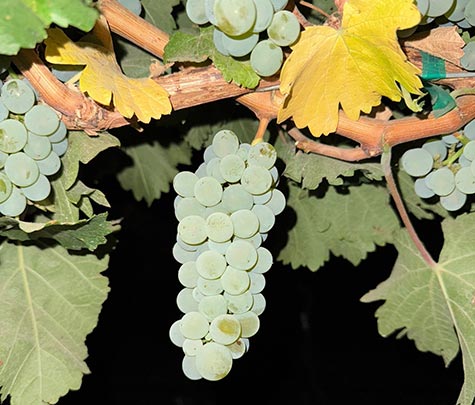
Additionally, a 2025 International Organization of Vine and Wine report indicates that global white wine consumption grew 43 percent over the past two decades.
“History does repeat itself, and trends seem to be cyclical,” notes Iverson. “I would say that the current upswing of white wines in Washington is a function of producers responding to what is resonating with consumers, and it seems to be more quality-driven rather than less expensive, large production wines.”
Embracing the Zeitgeist
Consequently, savvy Washington state vignerons have embraced the white wine zeitgeist. “I think people are gravitating toward [white wines] because, unlike consumers from 25 plus years ago, I think the younger generation’s not nearly afraid of experimenting with new varietals,” says industry veteran Craig Leuthold, co-founder and owner of Maryhill Winery near Goldendale, WA.
Founded in 1999, the 75,000-case winery and tasting room span a bluff above the Columbia River. Leuthold and his wife Victoria also operate satellite tastings rooms in Spokane, Woodinville, and Vancouver, Wash.
Leuthold asked the Tudor family of Grandview, Wash., one of Maryhill’s largest growers, to plant Albarino eight years ago after hunting for a white wine to balance out his wine club’s popular ‘eight reds/four whites’ offering.
“I call Albariño a red wine in white’s clothing—rich and full bodied with depth and complexity like a red but with a nice crisp finish like a white,” he says. “It really falls into its own category. We’ve converted many people who drank only red wines into drinking Albariño.”
Others jumped on the white wine wagon well ahead of the curve, too.
In 2007, Mercer Estates Winery planted an aromatic French variety, Viognier, on Horse Heaven Hills. “Viognier was first, as a great co-fermentation option for Syrah,” recalls owner Brenda Mercer. Additional plantings included Pinot Gris, Riesling, Sauvignon Blanc and Chardonnay.
White wines remain a Mercer Estates’ cornerstone. In 2025, the winery introduced an “Aromatic Whites Collection” showcasing winemaker Ali Mayfield’s first full harvest with the winery, and its 20th Anniversary.
The collection includes Small Lot Sauvignon Blanc and Viognier, Horse Heaven Hills Heritage Series Orange Muscat, Mercer Reserve “Good Day” Chardonnay, and Sonova Sage Sauvignon Blanc. “They are aromatic, fresh, a little bold and exciting!” reveals Mercer.
Meanwhile, James and Poppie Mantone of Syncline Winery introduced the Austrian variety Grüner Veltliner in 2008.
The winery derives its name from nearby “Coyote Wall Syncline,” a formation of inclined columnar basalt along the Columbia River in southern Washington State.
“David Lake, MW (Master of Wine), was the original person behind growing Grüner Veltliner in the Gorge,” says Mantone. Lake partnered with Jack Brady of Underwood Mountain Vineyards on the project.
“When David retired, and was no longer making wine, he cued us into this planting before it began production,” Mantone says, allowing Syncline to produce Washington State’s first Grüner Veltliner wines.
Terroir and Tradecraft
As Lake led the way pairing white wine grapes to proper terroir, others followed suit.
“It’s about matching the right grape and winemaking style to the place,” says Jeff Andrews, co-founder of luxury brand Trothe Wines in Prosser. “You can’t force a site to be something it isn’t. If we tried, the wines wouldn’t ring true.”
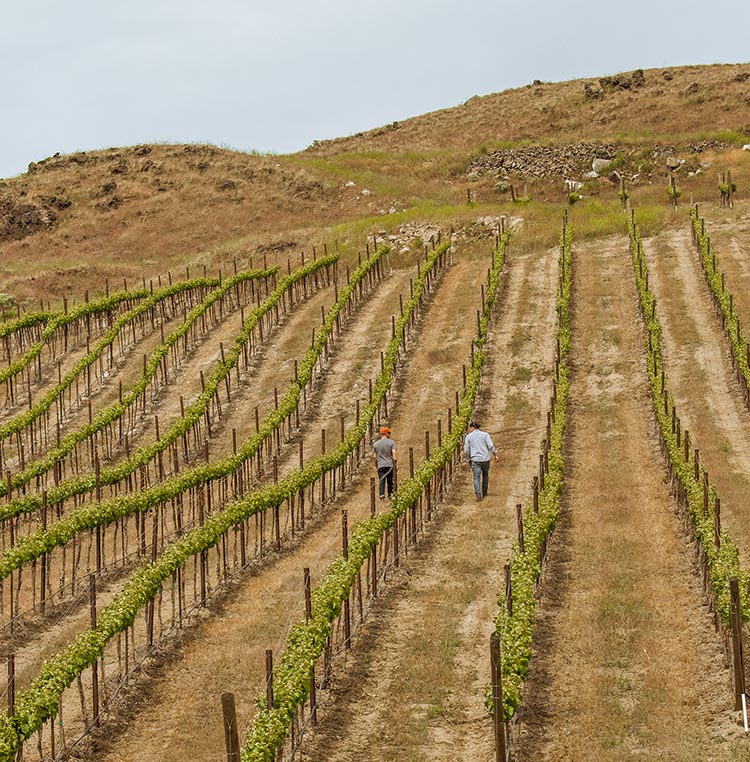
For Andrews, whose family roots reach back four generations in the area, “certain pockets of the Horse Heaven Hills are perfect for white varieties due to the unique combination of elevation, slope, soil, and wind—resulting in wines that couldn’t be produced anywhere else.”
Todd Chapman, Trothe’s vineyard manager, concurs: “Our diverse landscape, with its channeled scablands, canyons, and varying elevations, allows us to be precise.” For example, Cabernet vines favor warmer, south-facing slopes, but Sauvignon Blanc blocks thrive on cooler, north- and east-facing, higher elevation sites.
“This maximizes morning sun, and protects the grapes from extreme afternoon temperatures, which often peak around 5pm here in Washington,” explains Chapman.
“We believe our area grows bright, fresh white wine grapes,” underscores Brenda Mercer. “All of our white wine grapes now grow in the Horse Heaven Hills.”
Tenor’s single vineyard white wine portfolio spotlights this synergy between site and grape. “Those are our most distinctive, expressive, and site-driven wines,” says Iverson.
Vineyard designates include Spice Cabinet (Horse Heaven Hills), and Olsen (Yakima Valley) for Sauvignon Blancs, plus Solaksen and La Reyna (Royal Slope) and Conner Lee (Columbia Valley) for Chardonnay.
“These are all growers that go above and beyond for us in the vineyard,” he says. “Their care and attention to detail never ceases to amaze us.”
White Wines Rising
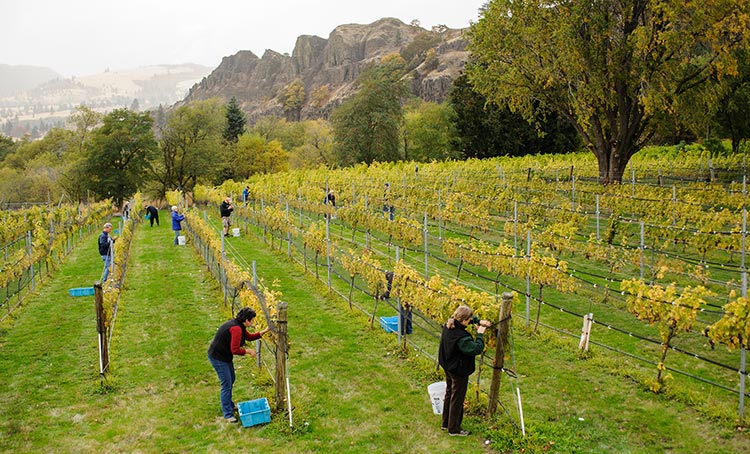
Further south, the Columbia Gorge proves another sweet spot for white grapes. Here, the rainy, windswept eastern edge of Columbia Gorge AVA transitions into Columbia Valley’s semi-arid high desert.
“The Columbia Gorge is very different from the Columbia Valley,” says James Mantone. “We typically see mature flavors at lower alcohols, with lower pH’s than elsewhere.”
“Also, often the wines finish the ripening process into October, where we tend to see more cloudy days, therefore they ripen under much lower UV radiation,” he adds.
“White wine continues to grow, and even in a challenging wine market, Washington is experiencing growth in aromatic whites,” emphasizes Kristina Kelley, executive director of the Washington State Wine Commission. “Our white wines are celebrated for their vibrant fruit character, natural balance, and versatility, making them food-friendly and enjoyable in any setting.”
As for competition with Washington red wines, many in the industry remain philosophical.
“While Washington’s red wines have been hitting home runs for a while now, it’s rewarding to see that the white wines are now garnering the recognition they deserve,” concludes winemaker Ray McKee of Trothe.