
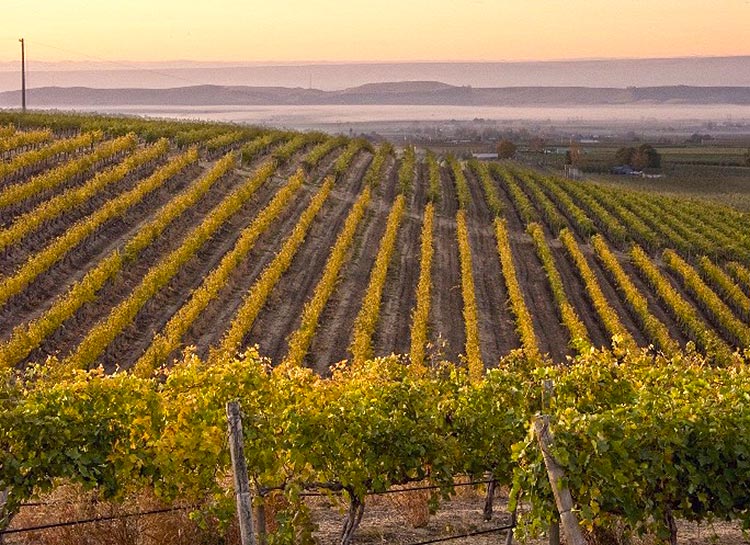
Yakima Valley, Wash. — March 12, 2018 — Owning a vineyard is like owning any other real estate: Location is everything. Well, maybe not EVERYthing. In viticulture, it’s not only where the vineyard is located; it’s also about how it is positioned. Elevation, slope and aspect (direction of slope south, southwest, etc.), play a critical role in any vineyard. These three elements are centrally embedded in climate—they are critical components of terroir, the personality a wine gets from a combination of climate, soil and winemaking technique.
The intensity of a region’s climate, such as the Yakima Valley’s cold winters and hot summers, elevates the importance of a vineyard’s elevation and aspect. During the summer months, the direction or angle to the sun is responsible for how much sunlight the grapes receive. The vines need enough sunlight to create healthy grapes but not too much sun to get sunburned. Conversely, cold winters kill pests that are prevalent in other milder wine-growing regions throughout the United States. This allows the Yakima Valley to integrate an effective pest-management system, aiding in the sustainability of the wine-growing region.
Mid-February’s 13-degree temperatures didn’t do any damage, according to Kerry Shiels of DuBrul Vineyard in Sunnyside. “The plants are still dormant, so when those cold temperatures arrived there was no harm to the grapevines,” she said. “During dormancy, the vines, depending on the variety, can sustain temperatures near zero degrees.”
The next concern for Valley wine grape growers will come in April, when new buds break and the young tissue is susceptible to cold nights. Spring frost is always a concern, but hillside vineyards, considered the most desirable, have a slope that helps protect the vines. Cold air is heavier than warm air, so it flows like water. Imagine a giant pitcher of water being poured over the top of the vineyard; the water runs downhill, flowing over the vines and pooling at the bottom. Wherever the water would pool is where the cold air settles. The pooling of cold air is where damage occurs, which is why you rarely see wine-grape vineyards planted on the valley floor.
Elevation is typically synonymous to poor soil. Less soil is a cause of better vineyard profiles. It creates more complex flavors, tannin development and increased intensity in the wines. There are strong correlations between elevation, favorable winter conditions, fewer soils, more basalt and additional heat throughout the growing season.
The Yakima Valley’s most renowned vineyards are situated on hillsides. A vineyard’s aspect enhances its wines, and the elevation protects the vines from the cold in the winter. When it comes to quality wine, vineyard location and elevation are paramount. During these cold winter months, growers can sit comfortably knowing their vineyard is safely positioned in the right location.
Contributed by Barb Glover, executive director of Wine Yakima Valley